
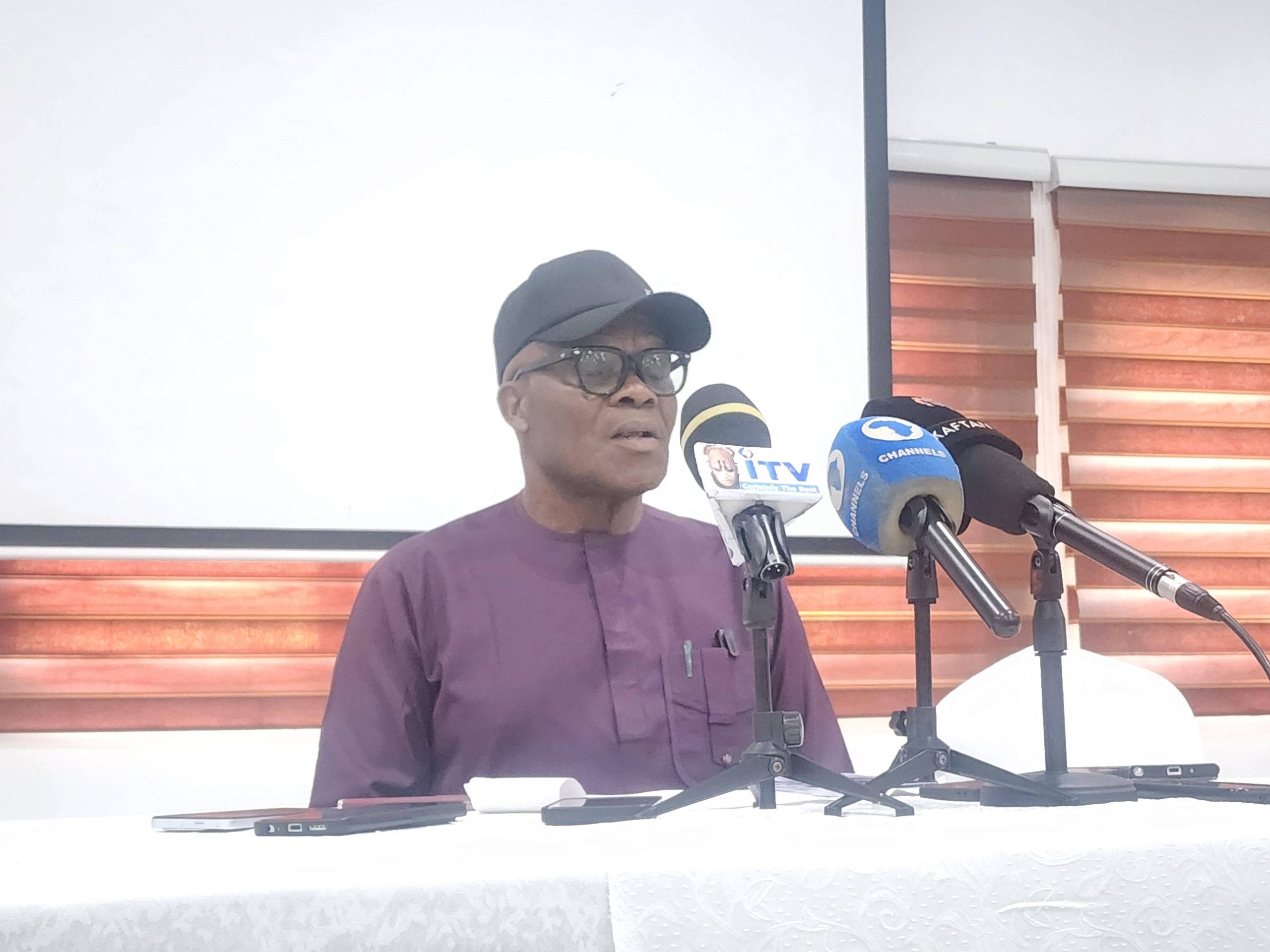
Former Nigeria Football Federation (NFF) Ethics Committee member, Ambassador Fanny Amun (MON), has called for sweeping reforms to the federation’s statutes, urging greater participation of credible and experienced football stakeholders in the administration of Nigerian football, Nigeriasoccernet.com reports.
Amun made the call in Abuja on Monday while briefing journalists after the submission of the report of a six-member committee he chaired to review Nigeria’s recent disappointing performances in international football.
The committee was set up following the Super Falcons’ disappointing campaign at the 2026 Women’s Africa Cup of Nations in Morocco, a result that ultimately contributed to Nigeria missing out on qualification for the 2027 FIFA Women’s World Cup in Brazil.
The review covered several areas, including NFF governance, financial management, technical development, grassroots football, player welfare, national team administration and domestic league management.
The committee identified several challenges affecting Nigeria’s national teams, including problems with player release and communication, inadequate preparations, medical and injury management, camp administration and technical coordination.
It also recommended greater adoption of technology and improved data management, particularly stronger age-verification systems, alongside enhanced regulations and closer monitoring of national team activities.
The committee called for comprehensive long-term development plans for both men’s and women’s football, regular training and retraining of technical and administrative personnel, improved domestic league structures and better preparation for international competitions.
Amun Wants NFF Congress Reformed
Governance emerged as one of the committee’s key areas of concern, with Amun criticising the NFF Congress for failing to embrace amendments that would allow more competent and experienced stakeholders to participate in the federation’s decision-making process.
He argued that the composition of the Congress should better reflect the wealth of knowledge and experience available within Nigerian football rather than remain restricted in a way that limits fresh ideas and accountability.
Amun further proposed that Congress members should be credible and experienced football personalities and should serve a maximum of two terms.
According to him, such measures would strengthen accountability, prevent excessive concentration of power and create opportunities for new ideas and leadership within the federation.
The committee also raised concerns over allegations of undue influence in the selection of national team players, financial inducements, disparities in the remuneration of players and officials, and the prolonged retention of certain federation officials in financially rewarding positions.
Amun stressed that the committee’s report would only be meaningful if its recommendations were followed by concrete action.
He therefore called for genuine political will among football stakeholders to implement reforms capable of addressing the structural challenges affecting Nigerian football.
The committee also recommended that the NFF thoroughly investigate all allegations, strengthen its internal accountability mechanisms and introduce measures to improve transparency, professionalism and efficiency.
Despite the concerns raised, the committee commended the Super Falcons for their commitment and efforts and urged Nigerians and football stakeholders to put recriminations aside and focus on rebuilding the country’s football structures.
Amun maintained that restoring confidence in Nigerian football should be the immediate priority, with competence, accountability, transparency and sustainable development placed at the heart of the game’s administration.